Minimally Invasive Treatment
Knee Arthroscopy

Overview
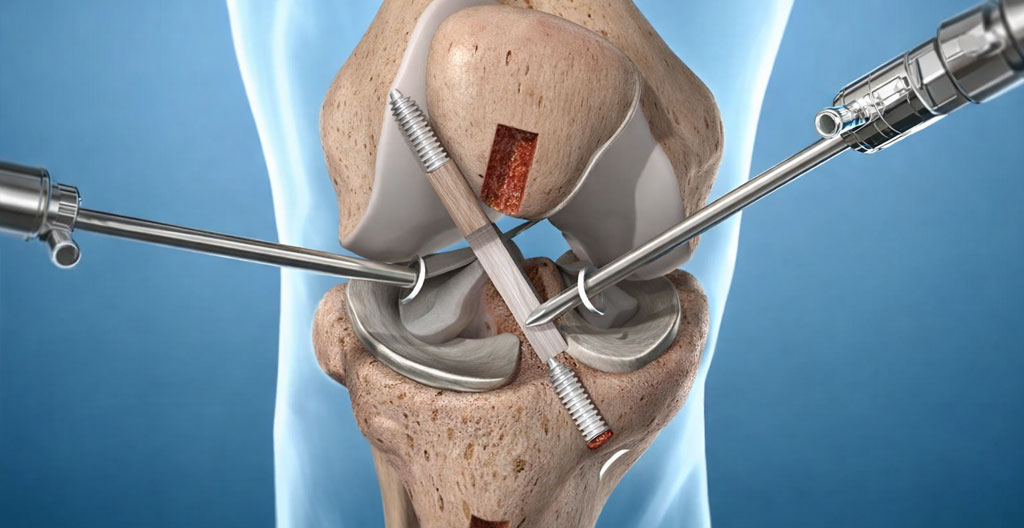
Knee Arthroscopy is a minimally invasive surgical procedure that allows accurate diagnosis and treatment of knee joint conditions through small keyhole incisions. A high-definition camera (arthroscope) and specialized instruments are used to visualize and repair internal knee structures with exceptional precision while preserving healthy tissue.
This advanced technique is commonly used to treat ACL and PCL injuries, meniscal tears, cartilage damage, and ligament avulsion fractures. Compared to open surgery, knee arthroscopy offers less postoperative pain, faster recovery, and an earlier return to daily activities and sports.
Conditions Treated with Knee Arthroscopy
-
ACL Injury
ACL tears commonly occur in sports involving sudden stops or direction changes. Arthroscopic ACL reconstruction rebuilds the torn ligament using grafts, restoring stability and function. -
Meniscus Tears
Tears caused by twisting injuries or degeneration are treated through arthroscopic repair or trimming, preserving joint function and preventing future arthritis. -
Other Ligament Injuries
Includes PCL, MCL, and LCL injuries. Arthroscopic and open reconstruction techniques restore stability and enable return to high-level activities.
Advantages of Knee Arthroscopy
-
Minimally Invasive Surgery
Small keyhole incisions reduce surgical trauma and preserve healthy tissue. -
Smaller Incisions & Minimal Scarring
Typically requires only 2–3 tiny punctures with excellent cosmetic outcomes. -
Reduced Pain and Swelling
Less tissue disruption leads to improved comfort and faster healing. -
Faster Rehabilitation
Most patients begin physiotherapy within days and recover rapidly. -
Better Visualization
High-definition camera provides detailed views for precise treatment. -
Early Return to Activities
Enables quicker return to work, sports, and daily activities.
Recovery Guidelines & Precautions
-
Activity Restrictions
- Avoid running, jumping, or twisting for 6–8 weeks.
- Follow physiotherapy protocol strictly.
- Gradual return to sports after surgeon clearance.
- Avoid full weight-bearing initially if advised.
-
Follow-Up & Monitoring
- Regular clinical and physiotherapy assessments.
- Rehabilitation modified based on recovery progress.
- Attend all scheduled follow-ups.
- Report unusual symptoms immediately.