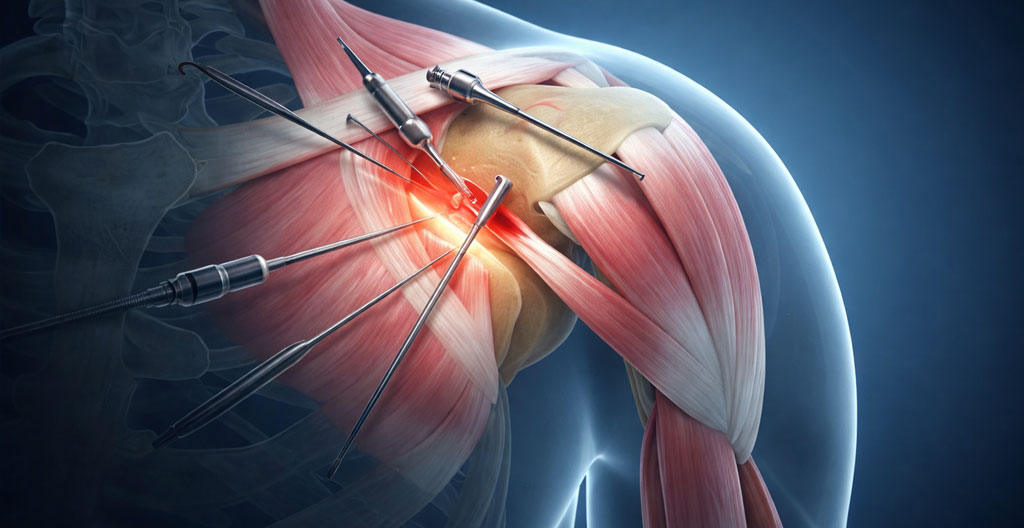
Advanced Minimally Invasive Treatment
Shoulder Arthroscopy

Overview
Shoulder Arthroscopy involves advanced minimally invasive procedures such as rotator cuff repair, Bankart repair, SLAP and labral repair, biceps tenotomy/tenodesis, and capsular release. Using state-of-the-art arthroscopic equipment, these techniques reduce tissue damage, minimize postoperative pain, and promote faster recovery.
Each procedure is tailored to the patient’s condition, ensuring precision and optimal outcomes. Patients benefit from effective management of dislocations, labral tears, muscle injuries, and rotator cuff tears, restoring stability and improving range of motion for a confident return to daily activities and sports.
Conditions Treated with Shoulder Arthroscopy
-
Latarjet Procedure
Performed for recurrent shoulder dislocations due to bone loss. A bone graft from the coracoid process restores joint stability and prevents further dislocations, especially in athletes. -
Dislocation
Arthroscopic stabilization repairs torn ligaments and tissues to prevent recurrent shoulder instability. -
Labral Tear
Repair of torn cartilage using small anchors restores joint stability and function. -
Muscle Injury
Minimally invasive repair of rotator cuff strains and tears reduces pain and prevents chronic problems. -
Rotator Cuff Tear
Reattachment of torn tendons to bone relieves pain and restores shoulder strength and movement.
Advantages of Shoulder Arthroscopy
-
Minimally Invasive Procedure
Tiny incisions reduce surgical trauma and preserve healthy tissues. -
Smaller Incisions
2–4 small punctures result in minimal scarring and better cosmetic results. -
Less Postoperative Pain
Reduced tissue disruption leads to quicker comfort and recovery. -
Faster Recovery
Most patients resume light activities within weeks. -
Better Joint Visualization
High-definition camera ensures accurate diagnosis and precise repair. -
Early Return to Activities
Structured rehab allows quicker return to work and sports.
Recovery Guidelines & Precautions
-
Activity Restrictions
- Avoid overhead movements and sudden jerky actions.
- Do not lift heavy objects with the operated arm.
- Refrain from sports until medically cleared.
- Gradually increase shoulder use under guidance.
-
Follow-Up & Monitoring
- Attend all scheduled follow-up visits.
- Progress assessed through clinical examination.
- Rehabilitation modified based on recovery.
- Report unusual pain or symptoms immediately.